

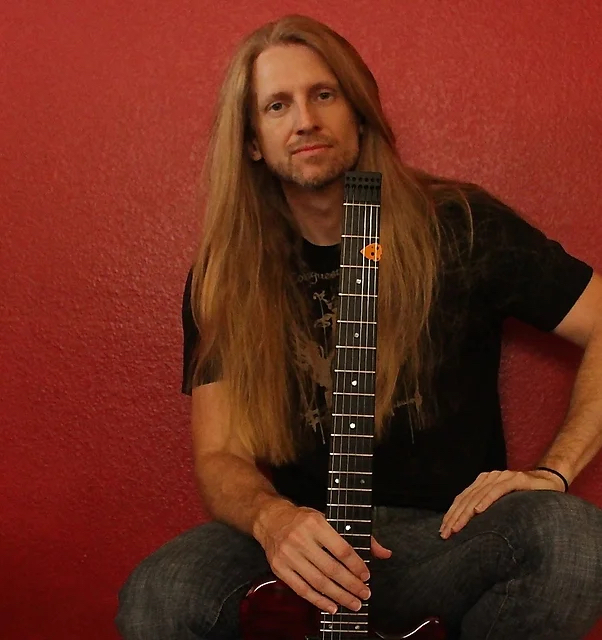
Guest author: Brett Stine
In this lesson we will discuss 8-note and 9-note non-diatonic scales and how to use them as compositional tools rather than just scales for improvisation. I will show examples that use the diminished scale (Messiaen’s second mode) and Messiaen’s third and fourth modes.
Why compose with these scales?
One reason to investigate and use these scales in a compositional context is to break out of the more traditional chord progressions such as I-IV-V, ii-V-I, iii-VI-ii-V-I, and so on. These are tried and true, used by countless composers in thousands of songs, but other options exist.
One of the fascinating things about non-diatonic scales is that you will often find chord progressions that most traditionalists would consider non-functional harmony, when in fact those progressions are functional to the non-diatonic scale.
For example, if you saw this chord progression:
Cmaj7#11 | Abmaj7#11 | Emaj7#11You would probably assume each chord was coming from three different major scales, with the keys cycling in major thirds. That is true, but all three chords also exist in C Mode 3 (Messiaen’s third mode). So this progression is in fact functional to C Mode 3 and can be viewed that way when improvising over it.
Things to do
When composing with these scales, look for and think about:
Unusual root movements. Move in cycles of half-steps, whole-steps, minor thirds or major thirds rather than the more traditional fourths and fifths. The intervallic cycles will be dictated by the non-diatonic scale you work with.
A particular voicing, like maj7#11, moved through a cycle of minor thirds or major thirds, as in the example above.
Symmetrical melodic ideas: melodic ideas repeated in cycles of half-steps, minor thirds, major thirds and so on, that stay within a given non-diatonic or symmetrical scale. The intro in Example 1 is a good example of this.
Unique voicings, clusters and intervallic structures rather than the common voicings found in most diatonic scales. For example, in C Mode 3 you can find the voicing C, B, Eb, E, which can be seen as a Cm(maj7) with an added major third, or a Cmaj7 with an added minor third (a #9). Not the most unusual voicing, but not your everyday one either. Experiment and see what you find.
Do not worry about naming voicings or using chord symbols. Many of these will be intervallic structures and clusters, and naming them can be difficult. Often no commonly used chord symbol will effectively represent the sound. Instead, much like Holdsworth, I have started writing the scale I am working with above the staff. For example, my symbols for Messiaen’s seven modes are MM1, MM2, MM3, and so on.
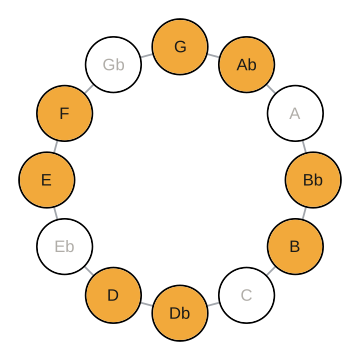
No 1 G Half-Whole Diminished (Messiaen M2)

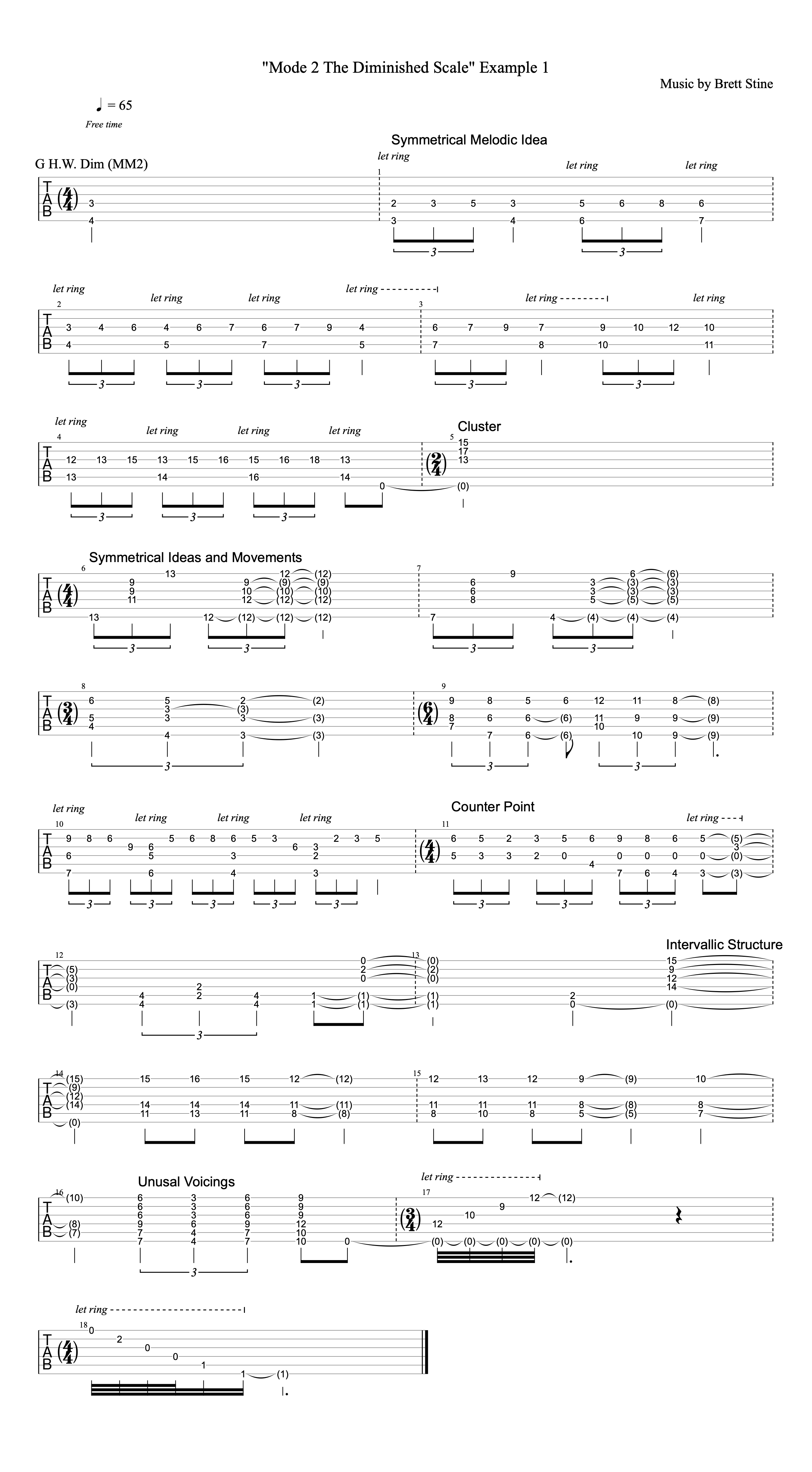
Used in Example 1: symmetrical melodic ideas, clusters and intervallic structures found within the diminished scale, along with more common compositional tools such as counterpoint.
Backing tracks
Jam this scale over these. They open on the track page.
Triads
GG, B, D GmG, Bb, D GdimG, Bb, Db AbdimAb, B, D BbBb, D, F BbmBb, Db, F BbdimBb, Db, E BdimB, D, F DbDb, F, Ab DbmDb, E, Ab DbdimDb, E, G DdimD, F, Ab EE, G#, B EmE, G, B EdimE, G, Bb FdimF, Ab, BSeventh chords
G7G, B, D, F Gm7G, Bb, D, F Gm7b5G, Bb, Db, F Gdim7G, Bb, Db, E G7b5G, B, Db, F G6G, B, D, E Gm6G, Bb, D, E Abdim7Ab, B, D, F Bb7Bb, D, F, Ab Bbm7Bb, Db, F, Ab Bbm7b5Bb, Db, E, Ab Bbdim7Bb, Db, E, G Bb7b5Bb, D, E, Ab Bb6Bb, D, F, G Bbm6Bb, Db, F, G Bdim7B, D, F, Ab Db7Db, F, Ab, B Dbm7Db, E, Ab, B14 more
This scale holds many more chords than these, with extensions, inversions and every voicing on the neck. Find them all in Fretly
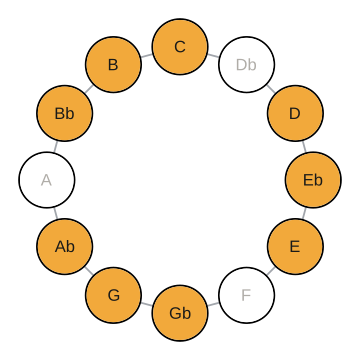
No 2 C Mode 3 (Messiaen M3)

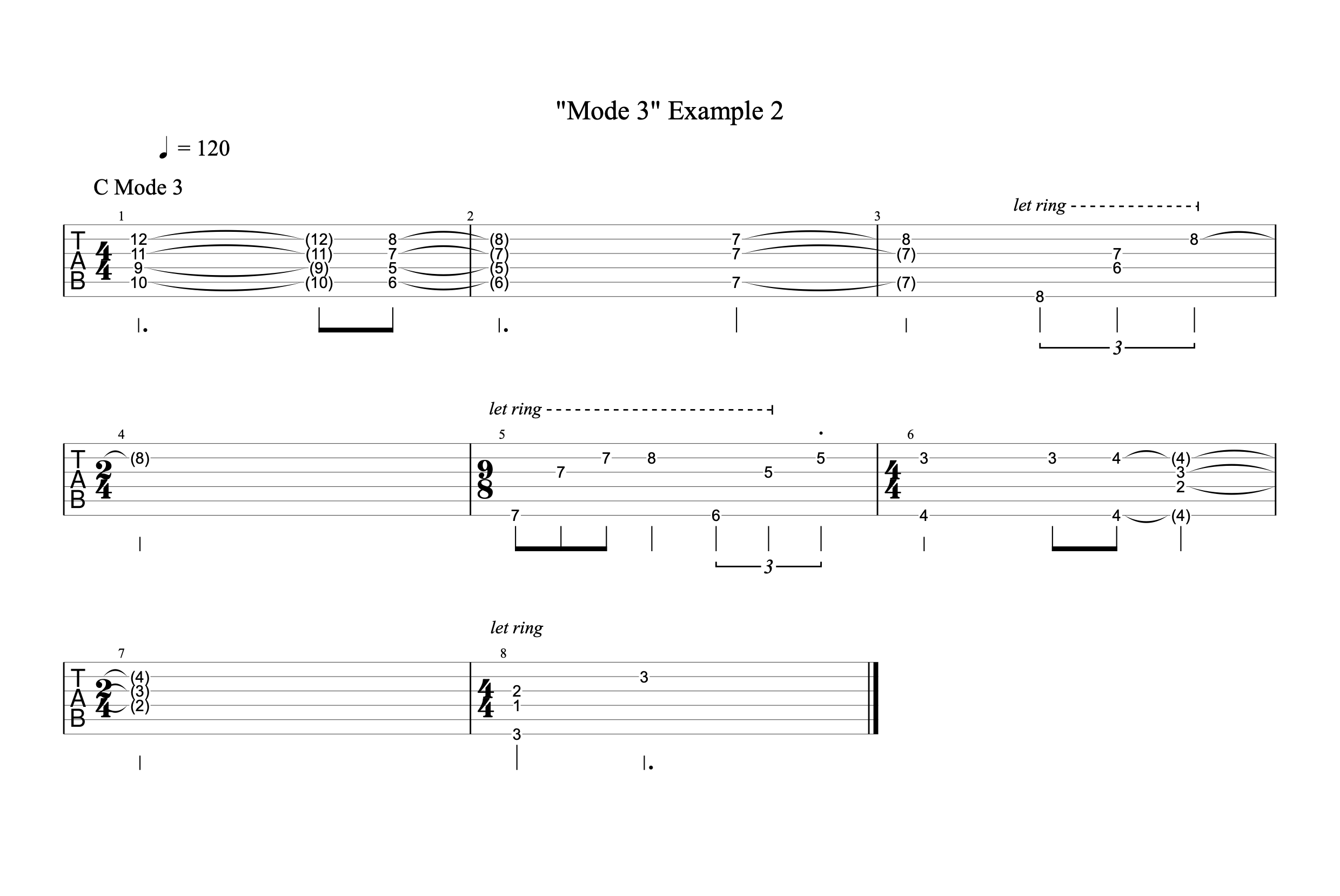
Used in Example 2: the whole progression is functional to C Mode 3 and can be viewed that way when improvising over it. In C Mode 3 you can find the voicing C–B–Eb–E: a Cm(maj7) with an added major third, or a Cmaj7 with an added minor third (a #9).
Triads
CC, E, G CmC, Eb, G CdimC, Eb, Gb C+C, E, G# Csus2C, D, G D+D, F#, A# EbEb, G, Bb EbmEb, Gb, Bb Eb+Eb, G, B Ebsus4Eb, Ab, Bb EE, G#, B EmE, G, B EdimE, G, Bb E+E, G#, C Esus2E, F#, B Gb+Gb, Bb, D GG, B, D GmG, Bb, D12 more
Seventh chords
Cmaj7C, E, G, B C7C, E, G, Bb Cm7C, Eb, G, Bb Cm7b5C, Eb, Gb, Bb CmMaj7C, Eb, G, B C7#5C, E, G#, Bb Cmaj7#5C, E, G#, B C7b5C, E, Gb, Bb Cmaj7b5C, E, Gb, B D7#5D, F#, A#, C D7b5D, F#, Ab, C Ebmaj7Eb, G, Bb, D EbmMaj7Eb, Gb, Bb, D Ebmaj7#5Eb, G, B, D Eb6Eb, G, Bb, C Ebm6Eb, Gb, Bb, C Ebmaj7sus4Eb, Ab, Bb, D Emaj7E, G#, B, D#33 more
This scale holds many more chords than these, with extensions, inversions and every voicing on the neck. Find them all in Fretly
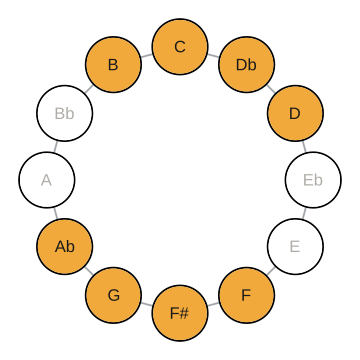
No 3 C Mode 4 (Messiaen M4)

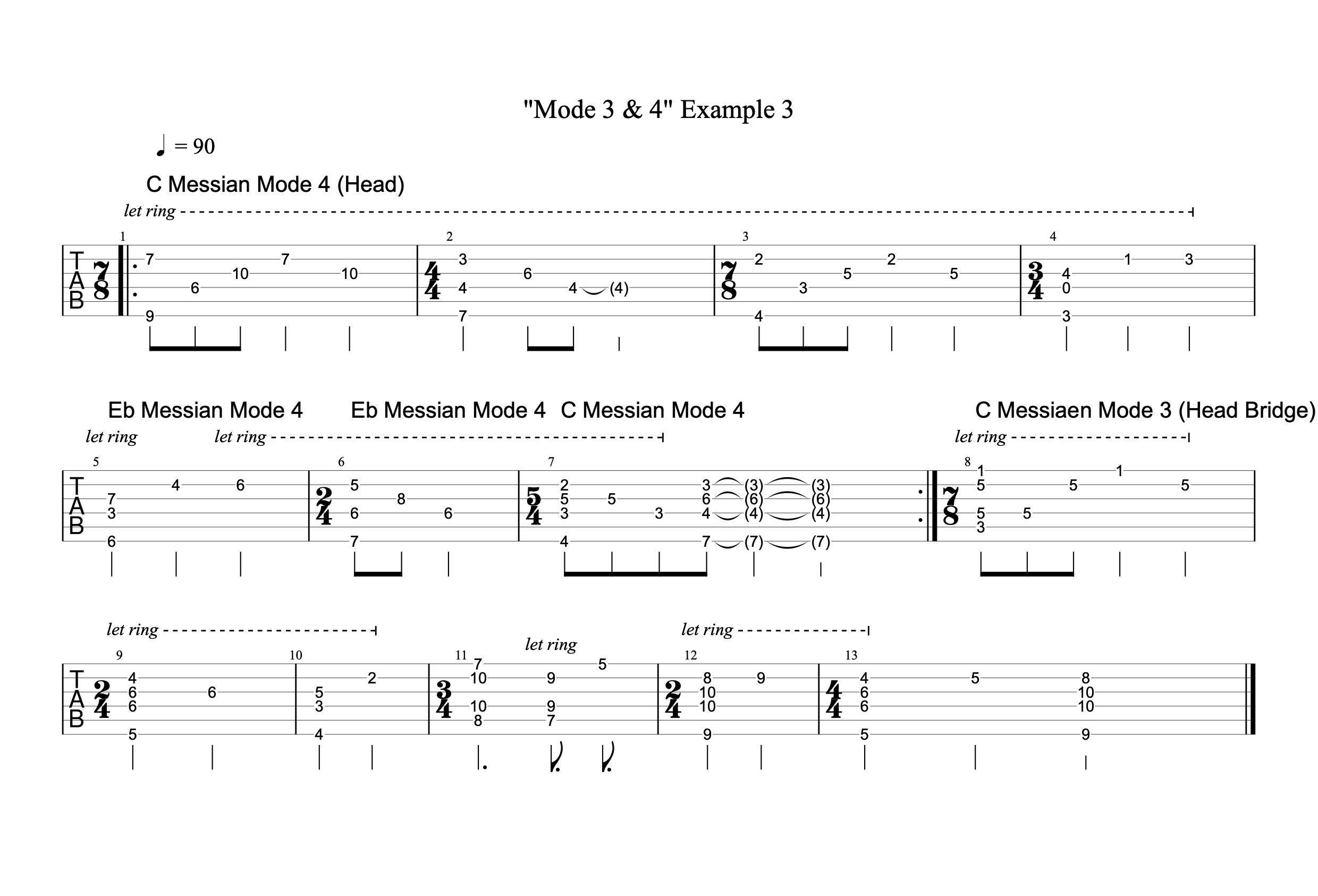
Used in Example 3: intervallic structure and unusual voicings found in C Mode 3 and C and Eb Mode 4, and an example of using various scales to create modulations.
Triads
Csus2C, D, G Csus4C, F, G DbDb, F, Ab Dbsus4Db, Gb, Ab DdimD, F, Ab FmF, Ab, C FdimF, Ab, B Fsus2F, G, C Gbsus2Gb, Ab, Db Gbsus4Gb, B, Db GG, B, D Gsus4G, C, D AbdimAb, B, D BmB, D, F# BdimB, D, F Bsus2B, C#, F#Seventh chords
Cmaj7sus4C, F, G, B Dbmaj7Db, F, Ab, C Db7Db, F, Ab, B Db7b5Db, F, G, B Dbmaj7b5Db, F, G, C Db7sus4Db, Gb, Ab, B Dbmaj7sus4Db, Gb, Ab, C Dm7b5D, F, Ab, C Ddim7D, F, Ab, B D7b5D, F#, Ab, C Dmaj7b5D, F#, Ab, C# Fdim7F, Ab, B, D Fm6F, Ab, C, D Gbmaj7sus4Gb, B, Db, F Gmaj7G, B, D, F# G7G, B, D, F G7b5G, B, Db, F Gmaj7b5G, B, Db, F#8 more
This scale holds many more chords than these, with extensions, inversions and every voicing on the neck. Find them all in Fretly
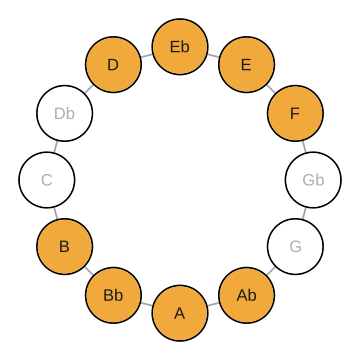
No 4 Eb Mode 4 (Messiaen M4)

The same Mode 4 structure transposed to Eb, paired with C Mode 4 in Example 3 to create the modulation.
Triads
Ebsus2Eb, F, Bb Ebsus4Eb, Ab, Bb EE, G#, B Esus4E, A, B FdimF, Ab, B AbmAb, B, Eb AbdimAb, B, D Absus2Ab, Bb, Eb Asus2A, B, E Asus4A, D, E BbBb, D, F Bbsus4Bb, Eb, F BdimB, D, F DmD, F, A DdimD, F, Ab Dsus2D, E, ASeventh chords
Ebmaj7sus4Eb, Ab, Bb, D Emaj7E, G#, B, D# E7E, G#, B, D E7b5E, G#, Bb, D Emaj7b5E, G#, Bb, D# E7sus4E, A, B, D Emaj7sus4E, A, B, D# Fm7b5F, Ab, B, Eb Fdim7F, Ab, B, D F7b5F, A, B, Eb Fmaj7b5F, A, B, E Abdim7Ab, B, D, F Abm6Ab, B, Eb, F Amaj7sus4A, D, E, G# Bbmaj7Bb, D, F, A Bb7Bb, D, F, Ab Bb7b5Bb, D, E, Ab Bbmaj7b5Bb, D, E, A8 more
This scale holds many more chords than these, with extensions, inversions and every voicing on the neck. Find them all in Fretly
Examples
Below are examples of tunes or sections of tunes I have written using these approaches.
Example 1: “G H.W. Diminished”
A tune I dedicated to Allan after he passed away. I had written it days before, and his music very much inspired it. In it I tried to use symmetrical melodic ideas, clusters and intervallic structures found within the diminished scale, along with more common compositional tools such as counterpoint.
Example 2: “C Mode 3”
A solo section of a tune that uses C Mode 3. The first half of the section uses much modulation until this point. Here I wanted to give the illusion of a lot of chordal movement while staying in one specific scale for six to eight bars, using unusual voicings and root movements. Again I was not concerned with naming the voicings; I simply put “C Mode 3” above the staff.
Example 3: “C Mode 3 and 4”
The head of a tune, using intervallic structure and unusual voicings found in C Mode 3 and C and Eb Mode 4. It is also an example of how you can use various scales to create modulations.
A few other things to keep in mind: songs written this way tend to be more like classical pieces, with much less room for interpretation in the head of the tune, unlike a jazz standard where you might use completely different voicings and rhythms each time. Holdsworth composed very much this way. The heads of his songs are played very close to the same every time, while the solo sections are more open.
These scales also tend to lead you in unexpected directions, so composing this way enables movements, modulations and voicings you otherwise would not have found. I have thought to myself many times: if I had not been thinking about this scale, I do not think I would ever have thought to do that.
Well, that is all for now. I hope you got something out of it. Until next time.
Guest author Brett Stine is a prolific guitarist and teacher, and the author of “In the Mystery”, a definitive and authorised work on the style and approach of Allan Holdsworth. Visit Brett’s website and his YouTube channel, and check out his cover of Allan’s solo on “The Drums Were Yellow”.