

How to apply the C Major Scale

scalesfundamentalsfretboard

In this post, we’ll deal with how to IMPROVISE using the C major scale, as soon as you start learning it.

Step 1: Memorize fingerings

Learn fingerings/patterns for major scale

Step 1a: Per String

For beginners in particular, but for advancing players also, it is actually a great idea to practice the scale “per string” at first and jam on backing tracks by playing the scale up and down and progressing to developing melodies on a single string.

Step 1b: CAGED

To get a ‘panoramic view’ of the entire guitar fretboard, learn the CAGED Patterns first. Don’t hesitate to start jamming on backing tracks right away.

Step 1c: 3NPS

The next step would be to learn the 3-notes-per-string fingerings for the C major scale. Again, practice with and start jamming on backing tracks right away.

Step 2: Jam on Backing Tracks

Jam on matching static backing tracks for each of the modes/chords of the scale. Take a lot of time for this and get a ‘feel’ for how the scale sounds on each of the chords.

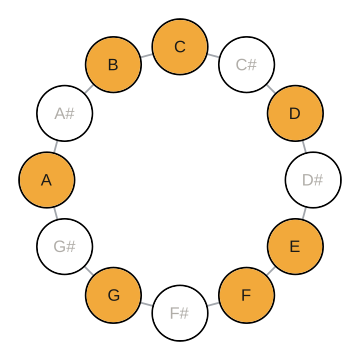
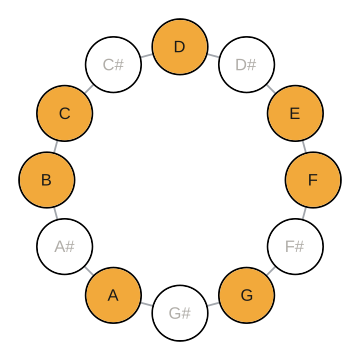
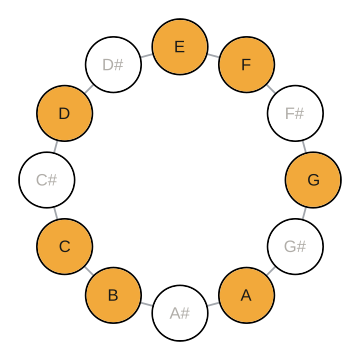
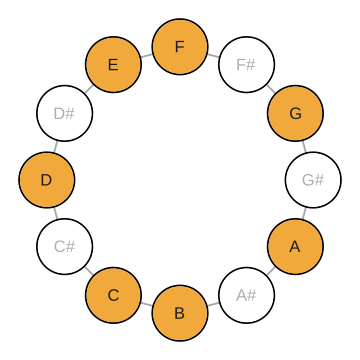
Browse the seven modes below; in particular, look at the scale circles for each of the notes and compare those to see how the intervallic structure differs between modes, while the scale itself and all the fingerings remain the same!

Scale 1 of 7How to apply the C Major Scale
Switch scales with the pills, the arrows, or when the console is focused.

No 1 C Ionian

Mode: I 1 – 2 – 3 – 4 – 5 – 6 – 7

C Ionian, the C major scale across the full neck, Fretly rendering

Study the intervallic structure of the ionian mode. Jam on Cmaj7 backing tracks and LISTEN to how each note sounds on that chord. Pay particular attention to the natural 4th interval, which is the (potentially ugly but can be beautiful) defining factor of this mode.
Explore C Ionian in Fretly

Backing tracks

Jam this scale over these. They open on the track page.

C Ionian scale circle diagram, Fretly rendering

Triads

CC, E, G Csus2C, D, G Csus4C, F, G DmD, F, A Dsus2D, E, A Dsus4D, G, A EmE, G, B Esus4E, A, B FF, A, C Fsus2F, G, C GG, B, D Gsus2G, A, D Gsus4G, C, D AmA, C, E Asus2A, B, E Asus4A, D, E BdimB, D, F

Seventh chords

Cmaj7C, E, G, B C6C, E, G, A Cmaj7sus4C, F, G, B Dm7D, F, A, C Dm6D, F, A, B D7sus4D, G, A, C Em7E, G, B, D E7sus4E, A, B, D Fmaj7F, A, C, E Fmaj7b5F, A, B, E F6F, A, C, D G7G, B, D, F G6G, B, D, E G7sus4G, C, D, F Am7A, C, E, G A7sus4A, D, E, G Bm7b5B, D, F, A

This scale holds many more chords than these, with extensions, inversions and every voicing on the neck. Find them all in Fretly

No 2 D Dorian

Mode: II 1 – 2 – b3 – 4 – 5 – 6 – b7

D Dorian, the C major scale across the full neck, Fretly rendering

Study the intervallic structure of the dorian mode. Jam on Dm7 backing tracks and LISTEN to how each note sounds on that chord. Pay particular attention to the natural 6th interval, which is the defining factor of this mode.
Explore D Dorian in Fretly

Backing tracks

Jam this scale over these. They open on the track page.

D Dorian scale circle diagram, Fretly rendering

Triads

DmD, F, A Dsus2D, E, A Dsus4D, G, A EmE, G, B Esus4E, A, B FF, A, C Fsus2F, G, C GG, B, D Gsus2G, A, D Gsus4G, C, D AmA, C, E Asus2A, B, E Asus4A, D, E BdimB, D, F CC, E, G Csus2C, D, G Csus4C, F, G

Seventh chords

Dm7D, F, A, C Dm6D, F, A, B D7sus4D, G, A, C Em7E, G, B, D E7sus4E, A, B, D Fmaj7F, A, C, E Fmaj7b5F, A, B, E F6F, A, C, D G7G, B, D, F G6G, B, D, E G7sus4G, C, D, F Am7A, C, E, G A7sus4A, D, E, G Bm7b5B, D, F, A Cmaj7C, E, G, B C6C, E, G, A Cmaj7sus4C, F, G, B

This scale holds many more chords than these, with extensions, inversions and every voicing on the neck. Find them all in Fretly

No 3 E Phrygian

Mode: III 1 – b2 – b3 – 4 – 5 – b6 – b7

E Phrygian, the C major scale across the full neck, Fretly rendering

Study the intervallic structure of the phrygian mode. Jam on Em7 AND E7(!!) backing tracks and LISTEN to how each note sounds on that chord. Pay particular attention to the b2 interval, which is the defining factor of this mode.
Explore E Phrygian in Fretly

Backing tracks

Jam this scale over these. They open on the track page.

E Phrygian scale circle diagram, Fretly rendering

Triads

EmE, G, B Esus4E, A, B FF, A, C Fsus2F, G, C GG, B, D Gsus2G, A, D Gsus4G, C, D AmA, C, E Asus2A, B, E Asus4A, D, E BdimB, D, F CC, E, G Csus2C, D, G Csus4C, F, G DmD, F, A Dsus2D, E, A Dsus4D, G, A

Seventh chords

Em7E, G, B, D E7sus4E, A, B, D Fmaj7F, A, C, E Fmaj7b5F, A, B, E F6F, A, C, D G7G, B, D, F G6G, B, D, E G7sus4G, C, D, F Am7A, C, E, G A7sus4A, D, E, G Bm7b5B, D, F, A Cmaj7C, E, G, B C6C, E, G, A Cmaj7sus4C, F, G, B Dm7D, F, A, C Dm6D, F, A, B D7sus4D, G, A, C

This scale holds many more chords than these, with extensions, inversions and every voicing on the neck. Find them all in Fretly

No 4 F Lydian

Mode: IV 1 – 2 – 3 – #4 – 5 – 6 – 7

F Lydian, the C major scale across the full neck, Fretly rendering

Study the intervallic structure of the lydian mode. Jam on Fmaj7 backing tracks and LISTEN to how each note sounds on that chord. Pay particular attention to the #4 interval, which is the defining factor of this mode.
Explore F Lydian in Fretly

Backing tracks

Jam this scale over these. They open on the track page.

F Lydian scale circle diagram, Fretly rendering

Triads

FF, A, C Fsus2F, G, C GG, B, D Gsus2G, A, D Gsus4G, C, D AmA, C, E Asus2A, B, E Asus4A, D, E BdimB, D, F CC, E, G Csus2C, D, G Csus4C, F, G DmD, F, A Dsus2D, E, A Dsus4D, G, A EmE, G, B Esus4E, A, B

Seventh chords

Fmaj7F, A, C, E Fmaj7b5F, A, B, E F6F, A, C, D G7G, B, D, F G6G, B, D, E G7sus4G, C, D, F Am7A, C, E, G A7sus4A, D, E, G Bm7b5B, D, F, A Cmaj7C, E, G, B C6C, E, G, A Cmaj7sus4C, F, G, B Dm7D, F, A, C Dm6D, F, A, B D7sus4D, G, A, C Em7E, G, B, D E7sus4E, A, B, D

This scale holds many more chords than these, with extensions, inversions and every voicing on the neck. Find them all in Fretly

No 5 G Mixolydian

Mode: V 1 – 2 – 3 – 4 – 5 – 6 – b7

G Mixolydian, the C major scale across the full neck, Fretly rendering

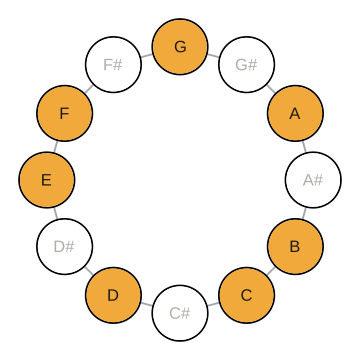
Study the intervallic structure of the mixolydian mode. Jam on G7 backing tracks and LISTEN to how each note sounds on that chord. Pay particular attention to the b7 interval, which is the defining factor of this mode.
Explore G Mixolydian in Fretly

Backing tracks

Jam this scale over these. They open on the track page.

G Mixolydian scale circle diagram, Fretly rendering

Triads

GG, B, D Gsus2G, A, D Gsus4G, C, D AmA, C, E Asus2A, B, E Asus4A, D, E BdimB, D, F CC, E, G Csus2C, D, G Csus4C, F, G DmD, F, A Dsus2D, E, A Dsus4D, G, A EmE, G, B Esus4E, A, B FF, A, C Fsus2F, G, C

Seventh chords

G7G, B, D, F G6G, B, D, E G7sus4G, C, D, F Am7A, C, E, G A7sus4A, D, E, G Bm7b5B, D, F, A Cmaj7C, E, G, B C6C, E, G, A Cmaj7sus4C, F, G, B Dm7D, F, A, C Dm6D, F, A, B D7sus4D, G, A, C Em7E, G, B, D E7sus4E, A, B, D Fmaj7F, A, C, E Fmaj7b5F, A, B, E F6F, A, C, D

This scale holds many more chords than these, with extensions, inversions and every voicing on the neck. Find them all in Fretly

No 6 A Aeolian

Mode: VI 1 – 2 – b3 – 4 – 5 – b6 – b7

A Aeolian, the C major scale across the full neck, Fretly rendering

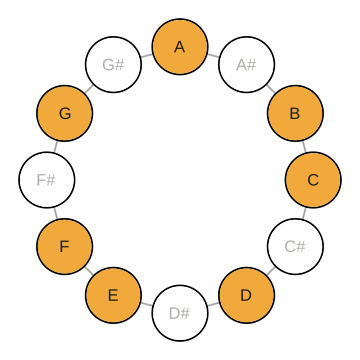
Study the intervallic structure of the aeolian mode. Jam on Am7 backing tracks and LISTEN to how each note sounds on that chord. Pay particular attention to the b6 interval, which is the defining factor of this mode.
Explore A Aeolian in Fretly

Backing tracks

Jam this scale over these. They open on the track page.

A Aeolian scale circle diagram, Fretly rendering

Triads

AmA, C, E Asus2A, B, E Asus4A, D, E BdimB, D, F CC, E, G Csus2C, D, G Csus4C, F, G DmD, F, A Dsus2D, E, A Dsus4D, G, A EmE, G, B Esus4E, A, B FF, A, C Fsus2F, G, C GG, B, D Gsus2G, A, D Gsus4G, C, D

Seventh chords

Am7A, C, E, G A7sus4A, D, E, G Bm7b5B, D, F, A Cmaj7C, E, G, B C6C, E, G, A Cmaj7sus4C, F, G, B Dm7D, F, A, C Dm6D, F, A, B D7sus4D, G, A, C Em7E, G, B, D E7sus4E, A, B, D Fmaj7F, A, C, E Fmaj7b5F, A, B, E F6F, A, C, D G7G, B, D, F G6G, B, D, E G7sus4G, C, D, F

This scale holds many more chords than these, with extensions, inversions and every voicing on the neck. Find them all in Fretly

No 7 B Locrian

Mode: VII 1 – b2 – b3 – 4 – b5 – b6 – b7

B Locrian, the C major scale across the full neck, Fretly rendering

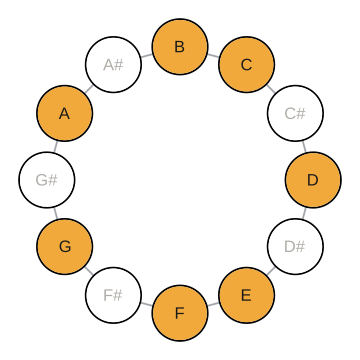
Study the intervallic structure of the locrian mode. Jam on Bm7b5 backing tracks and LISTEN to how each note sounds on that chord. Pay particular attention to the b5 interval, which is the defining factor of this mode.
Explore B Locrian in Fretly

Backing tracks

Jam this scale over these. They open on the track page.

B Locrian scale circle diagram, Fretly rendering

Triads

BdimB, D, F CC, E, G Csus2C, D, G Csus4C, F, G DmD, F, A Dsus2D, E, A Dsus4D, G, A EmE, G, B Esus4E, A, B FF, A, C Fsus2F, G, C GG, B, D Gsus2G, A, D Gsus4G, C, D AmA, C, E Asus2A, B, E Asus4A, D, E

Seventh chords

Bm7b5B, D, F, A Cmaj7C, E, G, B C6C, E, G, A Cmaj7sus4C, F, G, B Dm7D, F, A, C Dm6D, F, A, B D7sus4D, G, A, C Em7E, G, B, D E7sus4E, A, B, D Fmaj7F, A, C, E Fmaj7b5F, A, B, E F6F, A, C, D G7G, B, D, F G6G, B, D, E G7sus4G, C, D, F Am7A, C, E, G A7sus4A, D, E, G

This scale holds many more chords than these, with extensions, inversions and every voicing on the neck. Find them all in Fretly

The key is to SEE and HEAR each intervallic function in combination with the actual chord.

It would benefit you greatly to be able to correlate the scale intervals to triadic or seventh chord arpeggio of each particular chord. This is a topic for another post. Meanwhile, you can contact the author for a private lesson on this subject.


Want the connected fretboard in front of you, interactive, in every key and tuning? That’s exactly what Fretly is built for: see the C major scale light up across the neck and browse every fingering system in one place.

Theme